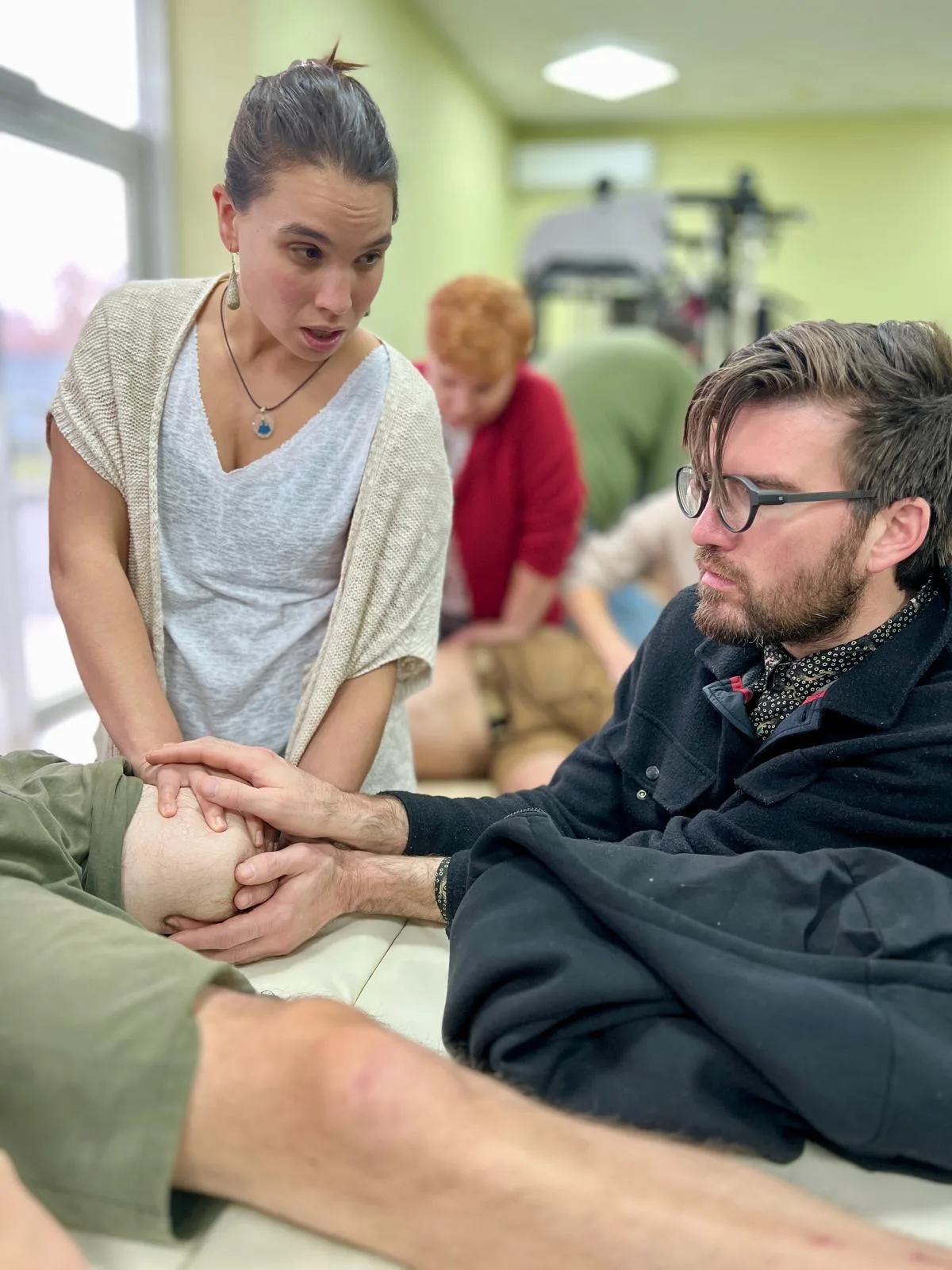
Earlier this year I gave a webinar for Anatomy Trains called "Being of Service: Taking Your Practice Into the World." It covered something I never expected to become a central part of my career: volunteering as a structural integration practitioner in an active war zone. I traveled to Ukraine twice with Sharon Wheeler to work on combat veterans, and the experience fundamentally rewired how I think about this work, who it's for, and what it means to show up for people in crisis.
I want to share the five lessons that came out of that experience. Not because I have it all figured out, but because I think they apply to every practitioner who has ever wondered whether their skills matter beyond the treatment room.
Lesson 1: Show Up – You Don't Need to Be Perfect to Be Useful
Before my first trip to Ukraine, I almost talked myself out of going. I kept thinking I wasn't experienced enough, that I didn't have the right trauma training, that someone more qualified should take my place. The voice in my head was relentless: who was I to think I could help people who had survived things I could barely imagine?
But here's what I learned: the biggest barrier to being of service isn't a lack of skill. It's the belief that you need to be perfect before you can be useful. The veterans we worked with didn't need a flawless practitioner. They needed someone who was willing to be present with them, to put hands on their body when most of the world had looked away.
Showing up imperfectly is infinitely more valuable than waiting on the sidelines for a readiness that never comes. If you have training in structural integration, you already have something powerful to offer. The world doesn't need you to be perfect. It needs you to be present.
Lesson 2: Adapt Your Tools – Standard Protocols Don't Work in War Zones
In my Santa Cruz practice, I have a clean treatment room, a high-quality table, climate control, and all the time I need. In Ukraine, we had none of that. We worked in austere environments: makeshift clinics, cramped rooms, sometimes with generators humming in the background and the distant sound of artillery. Sessions were shorter. Tables were whatever was available. The luxury of a carefully sequenced twelve-series protocol was out the window.
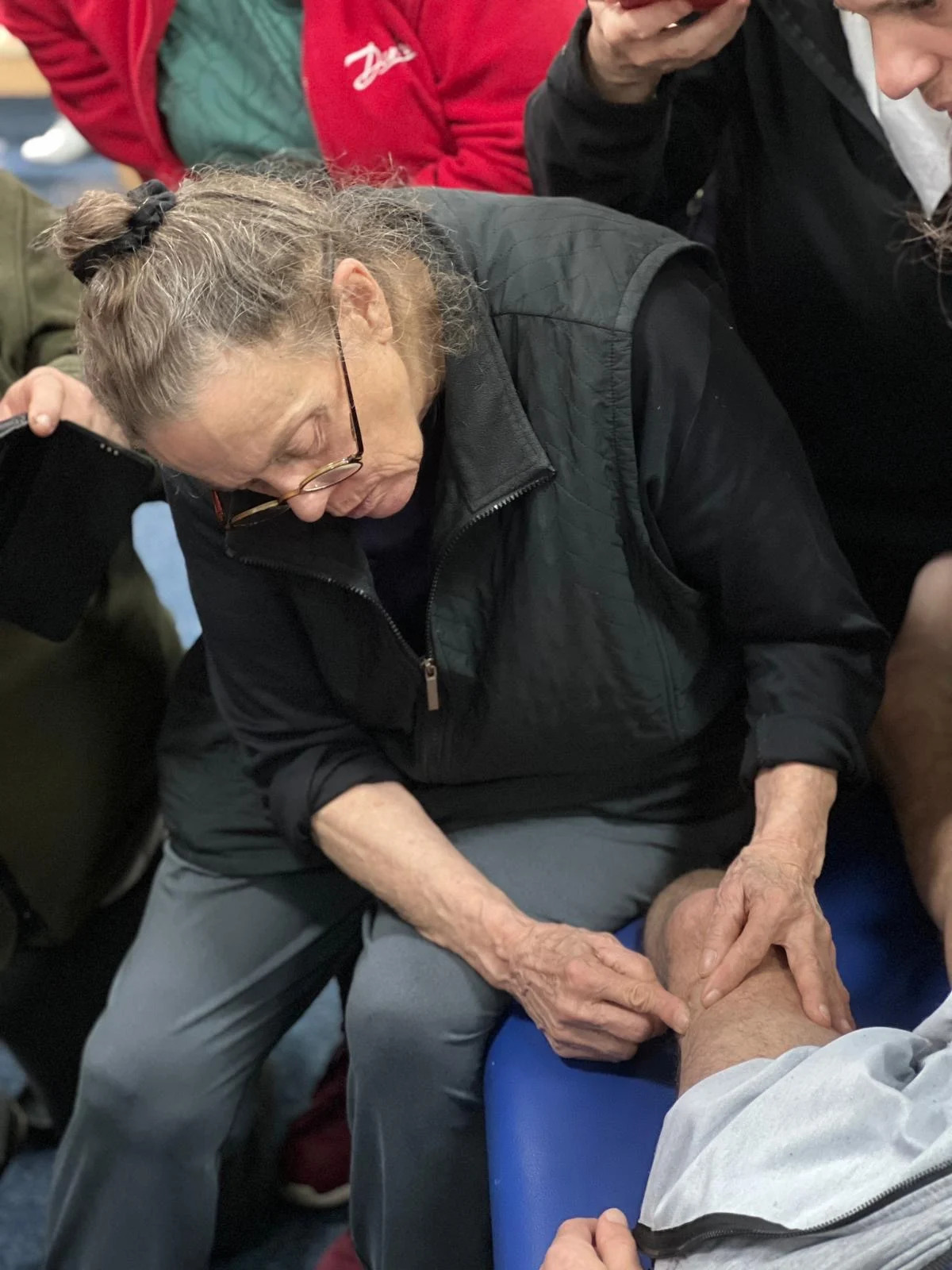
This forced me to strip my work down to its essentials. What actually matters when you have thirty minutes instead of ninety? What do you prioritize when someone can't lie prone because of shrapnel wounds? I learned to adapt on the fly, working seated, working standing, using techniques from Sharon Wheeler's bone work and scarwork that I never would have combined in a standard session back home.
The lesson extends far beyond war zones. Every client who walks into your practice is their own kind of extreme environment. The protocols are guides, not gospels. The best practitioners are the ones who can read the room and adapt.
Lesson 3: Radical Empathy Over Technical Perfection
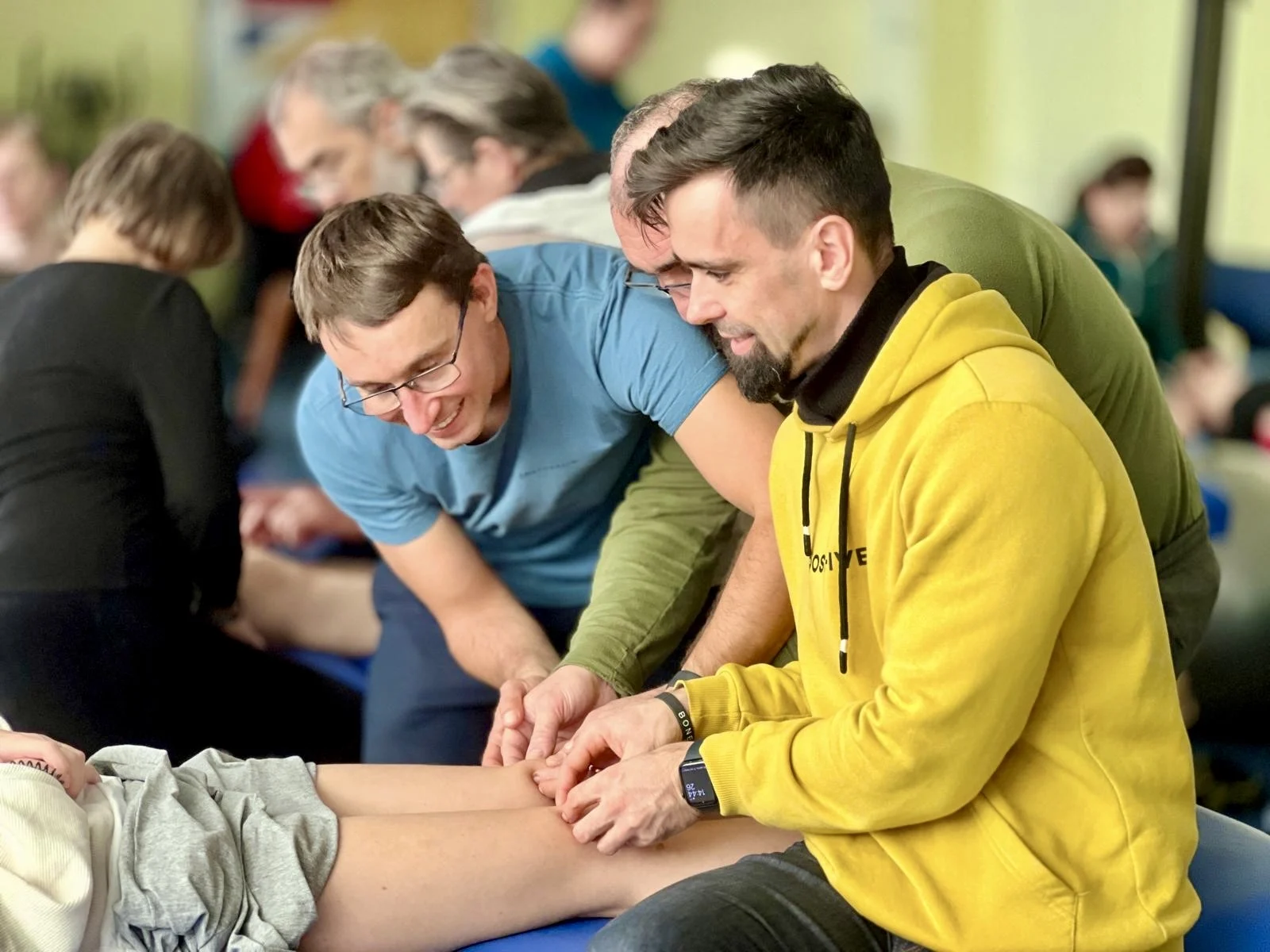
I've spent years refining my technical skills: studying anatomy, learning fascial lines, perfecting my touch. And all of that matters. But in Ukraine, I discovered that the most transformative sessions weren't the ones where I executed flawless technique. They were the ones where I was fully, completely present with the person in front of me.
One veteran, a young man who had lost partial use of his arm, barely spoke during our first session. But by the third session he was talking about his family, about what he missed, about what he was afraid of. The structural work opened something, yes, but it was the quality of attention, the willingness to simply be with his suffering without trying to fix it, that created the real shift.
Radical empathy means listening with your hands. It means prioritizing the human connection over the clinical outcome. Technical skill gets you in the door. Empathy is what makes the work actually land.
Lesson 4: Take Care of Yourself So You Can Take Care of Others
This one sounds obvious until you're in the thick of it. Working with combat veterans carries an emotional toll that I wasn't fully prepared for. You hear stories that stay with you. You see injuries that rewrite your understanding of what the human body can endure. The cumulative weight of that exposure is real, and if you don't actively manage it, it will break you down.
Sharon was adamant about this from day one: you cannot pour from an empty cup. We built rest into the schedule. We debriefed with each other every evening. I maintained my own movement practice and structural work throughout the trips. It wasn't selfish. It was essential.
This lesson has reshaped my practice at home in Santa Cruz. I'm more disciplined about my own self-care now. I take fewer clients per day. I move my own body before I work on anyone else's. The result is that I show up better for every single person on my table.
Lesson 5: The Work Changes You – You Come Back a Different Practitioner
I went to Ukraine thinking I was going to help people. And I did. But what I didn't anticipate was how profoundly the experience would change me. When you work in conditions that strip away every comfort and convenience, you're left with the raw essence of what this practice is: one human being using their hands to help another human being feel better in their body.
I came back to Santa Cruz with sharper instincts, deeper patience, and a completely different relationship with my work. I stopped worrying about whether I was doing things "right" and started paying more attention to whether I was doing things honestly. My hands became more sensitive. My sessions became more intuitive. The confidence I gained wasn't the kind that comes from certifications. It was the kind that comes from having been tested and finding out you're more capable than you thought.
If you ever get the chance to take your practice outside the walls of your clinic, whether that's volunteering abroad, working with underserved communities, or simply offering your skills in a context that scares you a little, take it. You'll come back a different practitioner. A better one.

Bringing It Home
These five lessons didn't stay in Ukraine. They followed me home and became the foundation of how I practice today. Every client on my table in Santa Cruz benefits from what I learned working in those austere environments: the adaptability, the presence, the understanding that technical skill without genuine human connection is just mechanics.
Structural integration is powerful work. But it becomes something truly extraordinary when it's driven by a commitment to service, to meeting people exactly where they are, in whatever condition they're in, and helping them find their way back to themselves.