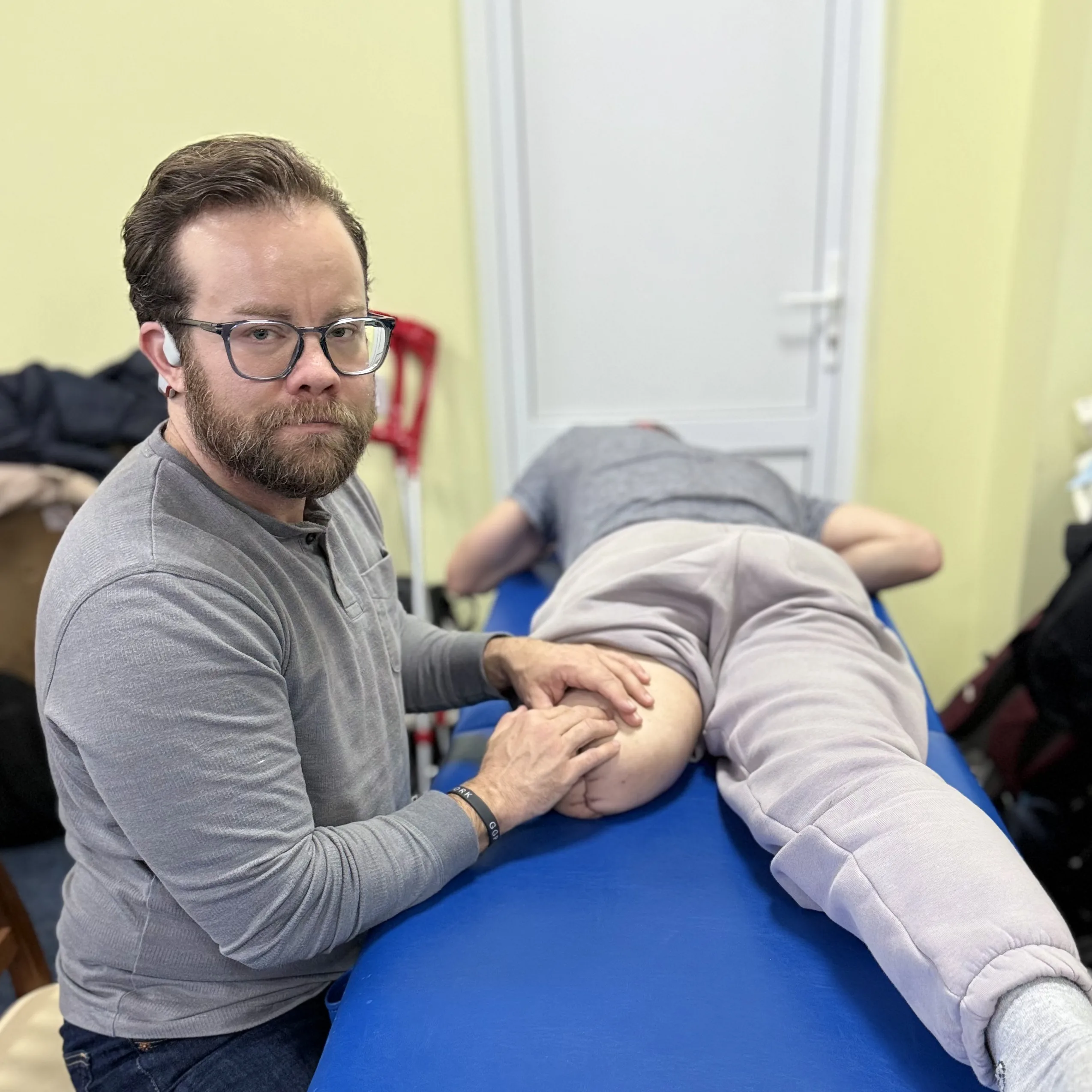
I want to tell you about something that changed the way I practice. Not a new technique I learned, not a certification I earned, but a shift in how I show up when I put my hands on another person. It happened in Ukraine, working alongside Sharon Wheeler on combat veterans who had lost limbs. And it rewired everything I thought I knew about what makes bodywork actually work.
Before I went, I thought I understood empathy. I cared about my clients. I listened. I created safe space. But what I discovered working with trauma survivors in a war zone is that there is a deeper level of presence that most of us in the bodywork world never access, because we have never been asked to. I started calling it radical empathy, and it has become the foundation of everything I do now.
Empathy in Bodywork Is Not What You Think
Most of us think of empathy as understanding what someone else is feeling. In everyday life, that is enough. But in bodywork, especially with people carrying deep trauma, understanding is not the same as meeting someone where they are. Everyday empathy says, "I can imagine what you are going through." Radical empathy says, "I am here with you, right now, in your body, without needing to fix anything or look away from what I find."
The distinction matters because the body knows the difference. Your nervous system can tell when someone is performing care versus when someone is genuinely present. And for people who have experienced severe trauma, people whose bodies have been through the worst things a human can endure, that difference is everything. It is the difference between a session that skims the surface and one that creates real change.
What Happens When You Lead with Presence
Imagine placing your hands on someone who lost both legs to a landmine. Someone whose body has been fundamentally altered by violence. Someone who has not been touched with care in months, maybe longer. In that moment, your technique is secondary. What matters first is whether you can be with that person without flinching, without pity, without rushing to do something.
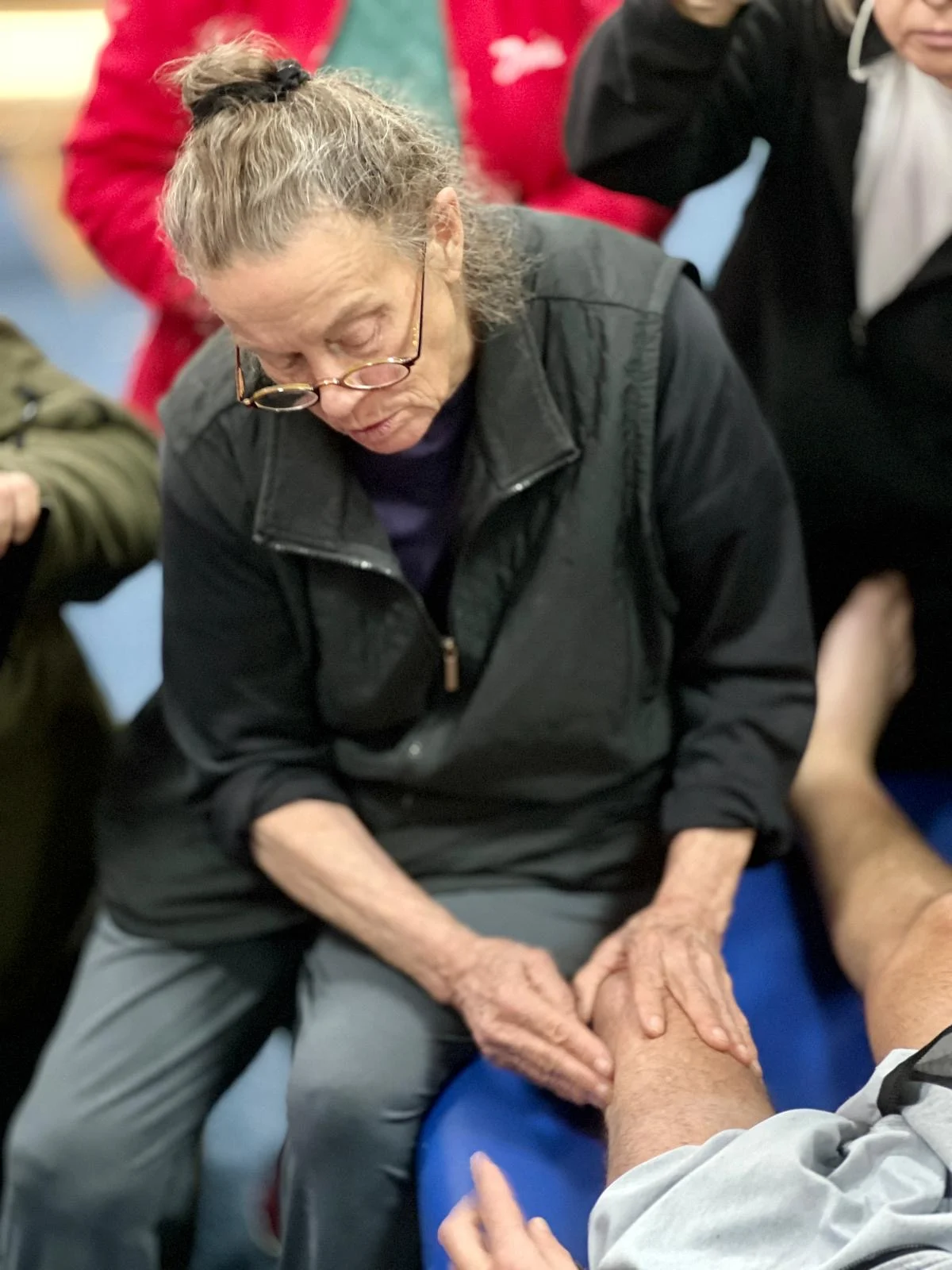
Sharon Wheeler, who has more than fifty years of experience in structural integration, modeled this for me in Ukraine. She would place her hands on a veteran's residual limb and just be there. Not assessing, not planning her next move, just making contact. And I watched these hardened combat soldiers soften. Their breathing would change. Their grip on the table would release. Something in them recognized that this person was not afraid of what had happened to them.
That is radical empathy. It is the willingness to meet someone's body exactly as it is, without needing it to be different, without needing to demonstrate your skill. The skill comes after. The presence comes first.

How Trauma Lives in the Body
Working with these veterans taught me something visceral about how the body holds trauma. We talk about this concept in bodywork circles all the time, the idea that fascia stores emotional experience, that tension patterns reflect psychological states. But seeing it in someone who survived a blast injury is a different kind of education.
The scar tissue around an amputation site is not just physical. It is a record of everything that happened: the explosion, the pain, the surgeries, the grief of losing a part of yourself. The tissue is dense, guarded, protective. The surrounding structures have reorganized around the absence of a limb, creating compensation patterns that ripple through the entire body.
And beneath all of that, there is a nervous system that learned to stay on high alert because staying on high alert kept this person alive. When you work with tissue like that, you are not just working with fascia. You are in conversation with someone's survival. If you rush it, if you push through it, if you treat it like just another adhesion to break up, you are telling that person's body that its experience does not matter. But if you slow down, if you listen to what the tissue is telling you, if you let the body set the pace, something remarkable happens. The tissue begins to trust your hands. It begins to release. Not because you forced it, but because you earned it.
What This Changed in My Practice Back Home
I came back to Santa Cruz a different practitioner. Not because I learned new scar tissue techniques, though I did. Not because I gained experience with amputations, though that was invaluable. I changed because I learned what it really means to be present with another person's body.
Now, when a client comes to me with chronic low back pain or a stiff neck from desk work, I bring the same quality of attention I brought to those veterans. I am not comparing their suffering. Pain is pain, and every body deserves to be met with full presence. But I approach every session differently now. I spend more time listening with my hands before I start working. I pay attention to how the tissue responds to contact before I ask it to change. I notice when a client's breathing shifts, when their body tenses under my hands, when something in them is asking me to slow down.
The results have been profound. Clients who have been stuck for months start making breakthroughs. People who were guarded on the table begin to let go. Not because my technique got better, though practice always refines technique, but because I learned to create the conditions where the body feels safe enough to change.
What This Means for You
If you are looking for bodywork, here is what I want you to know: the most important thing your practitioner brings to the table is not their resume, their modality, or how many continuing education hours they have logged. It is their presence. It is their ability to be with your body without an agenda beyond helping you.
When you find a practitioner who meets you with that kind of attention, your body knows. Your nervous system downregulates. Your fascia softens. The places in you that have been bracing, guarding, holding on for dear life begin to recognize that it is safe to let go. That is where real transformation happens. Not through force, not through clever technique, but through the simple, radical act of being fully present with another person's experience.
Ukraine taught me that. Those veterans taught me that. And it is the gift I bring into every session now, whether I am working with a combat survivor or a surfer with a tight hip. The body does not care about your story. It cares about whether the hands touching it are truly there.