People ask me this question more than any other: why would a structural integration practitioner from Santa Cruz, California, fly to Ukraine to work on combat veterans? It is a fair question. I have a full practice, a life I love, and no military background. But the answer is simple, even if living it out has been one of the most challenging things I have ever done. I volunteer because this work belongs where suffering is greatest, and because the people who need skilled touch the most are often the ones with the least access to it.
How It Started: The Call I Could Not Ignore
The opportunity came through Sharon Wheeler. If you are in the structural integration world, you know the name. Sharon has more than fifty years of experience in this work and is one of the most respected practitioners alive. She is a master of scar tissue work and bone work, techniques that are uniquely suited to helping people recover from catastrophic physical injuries. When the conflict in Ukraine escalated and veterans began returning from the front with devastating amputations and blast injuries, Sharon organized volunteer missions to bring structural integration directly to them.
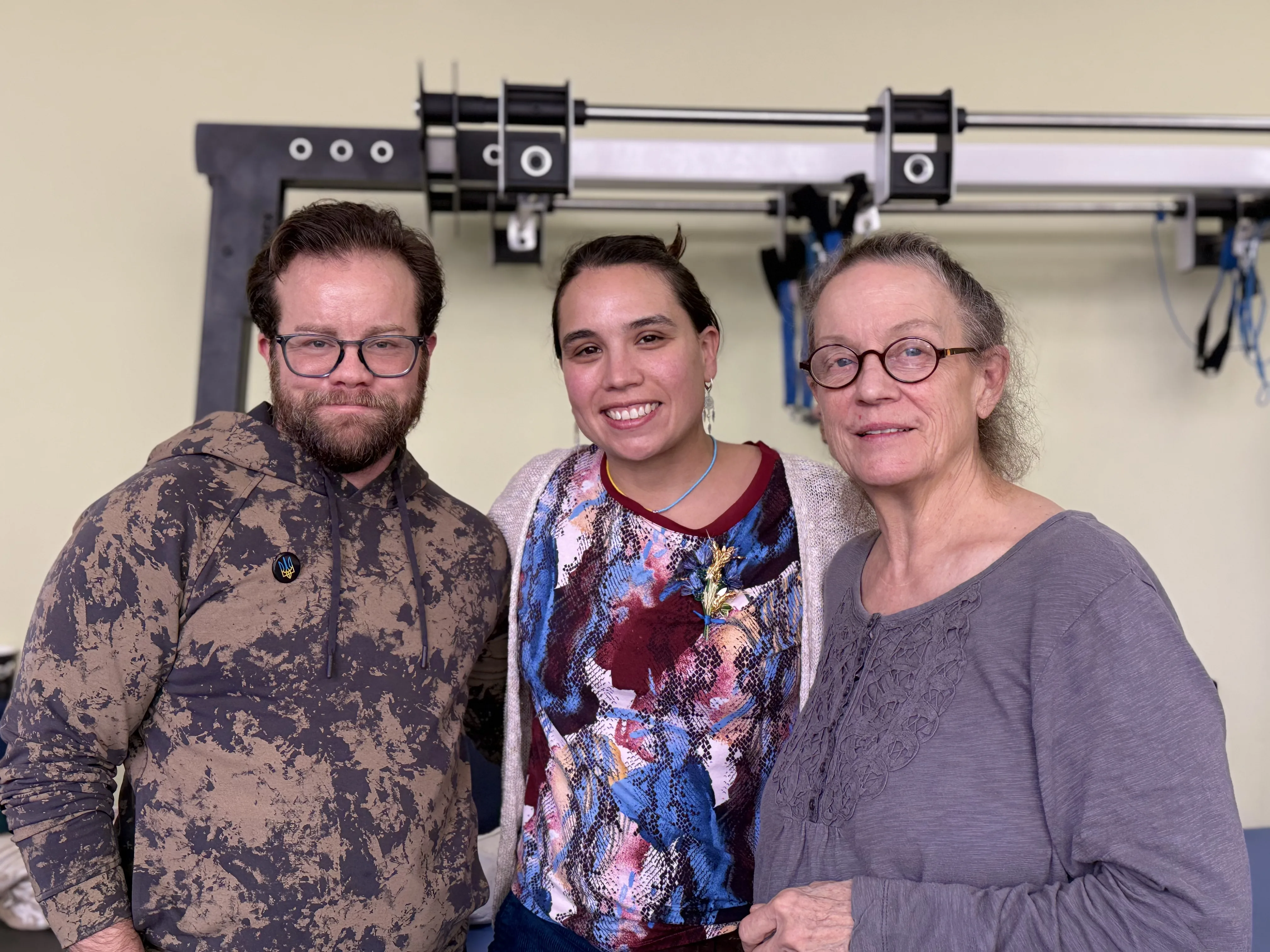
When the opportunity arose, I was not an expert. I was not a trauma specialist. I had never worked in an austere environment. I was not sure I could handle what I would see. But something deeper than rationality told me this was exactly where I needed to be. So I said yes. I have now gone twice, and each trip has redrawn the map of what I believe this work is for.
What Volunteer Structural Integration Actually Looks Like
I want to be honest about this because I think people imagine something more polished than the reality. This is not a retreat. There are no essential oils, no ambient music, no perfectly padded tables in a temperature-controlled room. We work in whatever space is available. We work in a repurposed hotel that now serves as a rehab facility. The conditions are stripped down, and the people in front of you have been through things that no amount of training can fully prepare you for.
A typical day means working on multiple veterans, one after another, each with a different constellation of injuries. One person might have a below-knee amputation with extensive scar tissue that has locked up the entire fascial web of their remaining leg. The next might have shrapnel wounds across their torso that have created adhesions pulling their structure into painful compensation patterns. Another might have full use of their limbs but a nervous system so locked into hypervigilance that their entire body feels like armor.
You adapt. You improvise. You draw on everything you have ever learned and you learn more in a single afternoon than you thought possible. Sharon's mentorship in these moments is extraordinary. Watching her read a body that has been through catastrophic trauma and knowing exactly where to start is like watching a master musician improvise. She taught me that the standard protocols we learn in class are a starting point, not a destination, and that real mastery means knowing when to throw the playbook away.
What Structural Integration Offers That Other Modalities Cannot
This is something I feel strongly about. The veterans we work with have access to physical therapy, occupational therapy, and in some cases psychotherapy. Those are all valuable. But structural integration does something that none of those modalities address directly: it reorganizes the body's fascial system as a whole. It does not treat one injury in isolation. It looks at how the entire structure has adapted and works to bring the whole system back into balance.
For someone who has lost a limb, this is critical. An amputation does not just affect the site where the limb was lost. It changes everything. The pelvis tilts. The spine compensates. The remaining leg takes on loads it was never designed to bear alone. The shoulders creep forward as the person unconsciously guards their center of gravity. Scar tissue at the amputation site creates fascial restrictions that radiate outward like ripples in water.
Physical therapy strengthens the muscles around the injury. Occupational therapy teaches the person to function with their new reality. But structural integration addresses the underlying architecture. It works with the connective tissue matrix to create the conditions where those other therapies can be more effective. When we release scar tissue adhesions and restore glide between fascial layers, the veteran's prosthetic fits better, their gait improves, their phantom pain often decreases, and their body stops fighting itself. I have watched this happen repeatedly, and it never stops being remarkable.
How Volunteering Changed My Relationship to My Own Practice
Before Ukraine, there were some days when my practice felt routine: a client with a stiff neck, another with low back pain. It's all important work, meaningful work, but sometimes I caught myself going through the motions. I know the patterns, I know the techniques, and I can deliver good results on autopilot, but I don't.
Ukraine destroyed that autopilot. When you work with someone who lost both legs and is learning to navigate the world in a wheelchair, when you feel the density of scar tissue that formed over shrapnel wounds, when you watch a veteran cry during a session because it is the first time someone has touched them with care since their injury, you cannot stay on cruise control. The experience woke me up to the privilege and the responsibility of this work in a way that no continuing education course ever could.
Now when I work with clients in Santa Cruz, I bring that same intensity and reverence. The person on my table with a desk-work neck might not have survived an explosion, but their body deserves the same quality of attention. Their pain is real. Their patterns are real. And the opportunity to help them reorganize their structure and move through the world with less friction is a gift I no longer take for granted.
A Challenge to Other Practitioners
I am not writing this to position myself as heroic. Plenty of people are doing far more in far harder circumstances. I am writing this because I want other practitioners to know that your skills are needed beyond the walls of your practice. You do not have to go to a war zone. There are communities near you right now, people recovering from injuries, people dealing with chronic pain, people who cannot afford bodywork, who would benefit enormously from what you know how to do.
Find a way to serve. Volunteer at a veterans' organization. Offer reduced-rate sessions to people going through rehabilitation. Partner with a local nonprofit. The specific form matters less than the willingness to take your skills outside the comfortable context where you usually practice them. Here is what I have found: when you serve without expectation of anything in return, the work gets better. Your hands get smarter. Your instincts get sharper. You remember why you got into this field in the first place.
Structural integration is a profound modality. Ida Rolf gave us something extraordinary. But its full potential is only realized when we are willing to bring it to the people and places that need it most, not just the people who can find us online and book an appointment. The world is full of bodies in pain. We have the skills to help. The question is whether we are willing to show up.