Shoulder surgery scar work
The shoulder is the most mobile joint in the body, and it pays a price for that mobility. Rotator cuff repairs, labrum repairs, shoulder replacements, and arthroscopic cleanups all leave scar tissue in a joint that depends on unrestricted movement. When scar tissue limits even a few degrees of range, the entire shoulder complex compensates. ScarWork helps restore what the scar tissue is taking away.
Understanding shoulder surgery scars
Shoulder surgeries vary widely in scope, but they share a common feature: they all create scar tissue inside a joint that needs full, unrestricted range of motion to function properly. Arthroscopic procedures, the most common approach, use 2 to 4 small portal incisions around the shoulder. Each portal penetrates the skin, the deltoid fascia, and the joint capsule. Open procedures, used for shoulder replacements and some larger rotator cuff repairs, involve a longer incision and more extensive tissue dissection.
Rotator cuff repairs reattach torn tendon to bone using suture anchors. The body heals this repair with scar tissue, which is the goal. But that scar tissue does not stop at the repair site. It spreads into the surrounding bursa, the joint capsule, and the fascial planes around the shoulder. Labrum repairs involve similar anchor-based fixation along the rim of the socket, and the resulting scar tissue can thicken the capsule and restrict the natural glide of the humeral head.
Shoulder replacement surgery involves larger incisions and more extensive internal work. The scar tissue forms around the new hardware, through the repaired subscapularis tendon, and across the layers of deltoid and fascia that were divided to access the joint. The combination of surface scarring and deep internal adhesions creates a complex restriction pattern.
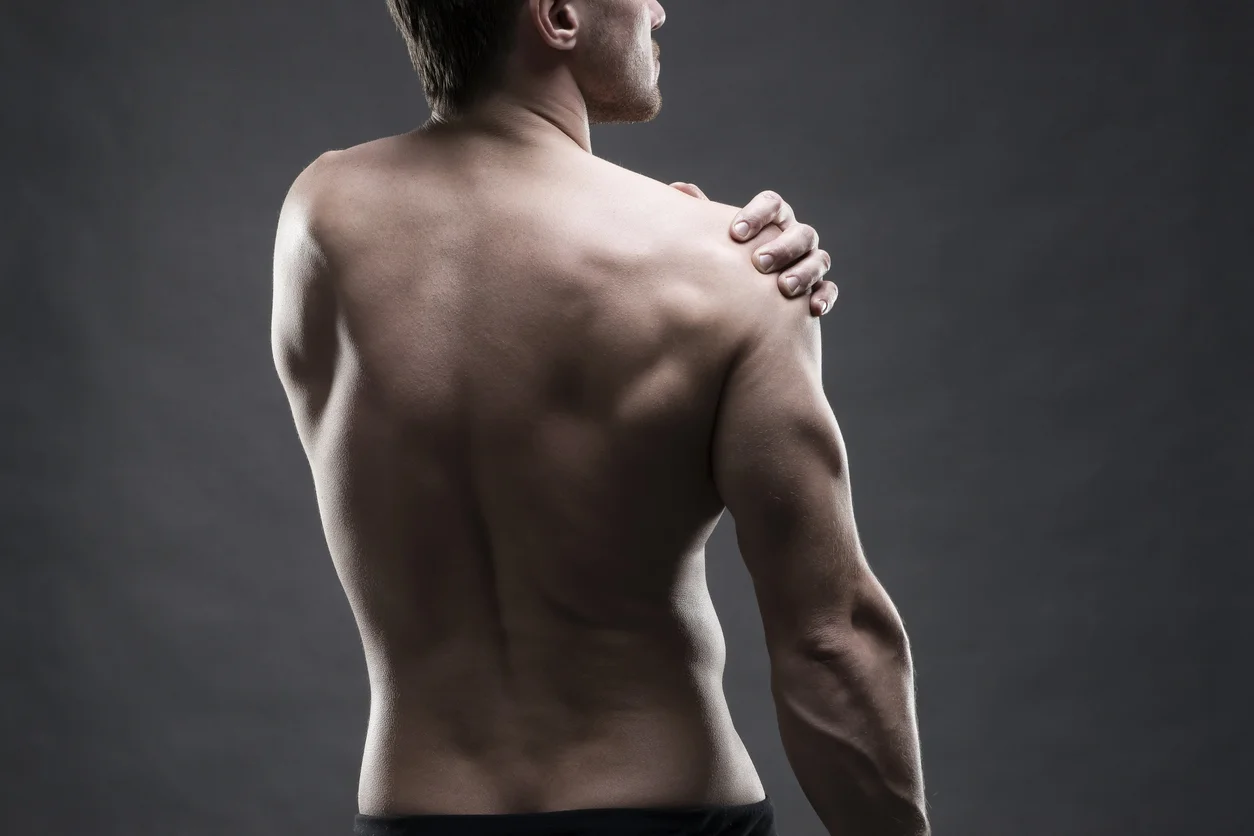
Common issues after shoulder surgery
These are the complaints I hear most often from clients recovering from shoulder surgery. Many have completed their prescribed physical therapy and made good progress, but have hit a plateau they cannot push through.
- Limited overhead reach despite months of physical therapy
- Stiffness when reaching behind the back
- Dense, adhered port site scars that restrict the deltoid
- A catching or pinching sensation during certain movements
- Persistent tightness across the front of the shoulder
- Difficulty sleeping on the surgical side
- Compensatory neck and upper back tension
- Loss of the smooth, fluid quality of shoulder movement
How ScarWork helps after shoulder surgery
ScarWork for shoulder surgery starts with the portal or incision scars. These small scars often get overlooked, but they can be surprisingly restrictive. Each arthroscopic portal passes through the deltoid muscle and its fascial layers. When scar tissue binds the skin to the deltoid at these points, it creates small tethers that interfere with the muscle's ability to contract and stretch smoothly. Releasing these adhesions often produces an immediate improvement in range of motion.
We then address the broader fascial restrictions around the shoulder. The deltoid, the pectoral fascia, and the tissue of the axilla all participate in shoulder movement. Post-surgical adhesions in any of these areas create drag on the joint. Systematically releasing these layers restores the smooth, coordinated movement that the shoulder needs.
For rotator cuff repairs, I focus on the tissue around the repair site without disturbing the repair itself. The scar tissue that forms in the subacromial space and around the repaired tendon can thicken and restrict the normal glide of the rotator cuff beneath the acromion. Softening this tissue reduces impingement symptoms and allows the repaired tendon to move more freely.
The compensatory patterns matter too. By the time clients come to see me, they have often developed significant tension in the upper trapezius, the levator scapulae, and the neck from months of guarding the shoulder. Releasing the scar tissue at its source allows these compensatory patterns to unwind naturally.

Treatment timeline
Timing depends on the type of surgery. For arthroscopic procedures, ScarWork can typically begin 10 to 12 weeks after surgery, once the soft tissue repairs have had time to establish initial healing. For shoulder replacements, I generally recommend waiting 12 to 16 weeks. Your surgeon's guidance on tissue healing always takes priority.
Most shoulder surgery scars respond well in 3 to 5 sessions. The shoulder has many layers of tissue involved, and working through each one takes time. Sessions are spaced one to two weeks apart. ScarWork pairs extremely well with ongoing physical therapy. The PT builds strength and motor control while ScarWork removes the tissue restrictions that are limiting progress. Many physical therapists refer clients to me when they recognize that scar tissue is the barrier.
Related resources
Learn more about how ScarWork addresses surgical scars and joint-related scar tissue.