The interstitium and why serious athletes are paying attention
The New York Times Magazine just mapped your body's third circulatory system. It is the fluid network running through your fascia, and it is the tissue I work with every session.
What just changed
In May 2026, the New York Times Magazine published an interactive feature on the interstitium, the body-wide network of fluid-filled spaces woven through your connective tissue. Researchers are describing it as a third circulatory system, working alongside blood and lymph.
What is new is not that fascia exists. What is new is that mainstream anatomy now sees it as a unified, organized, signaling system, the way Anatomy Trains practitioners have framed it for thirty years.
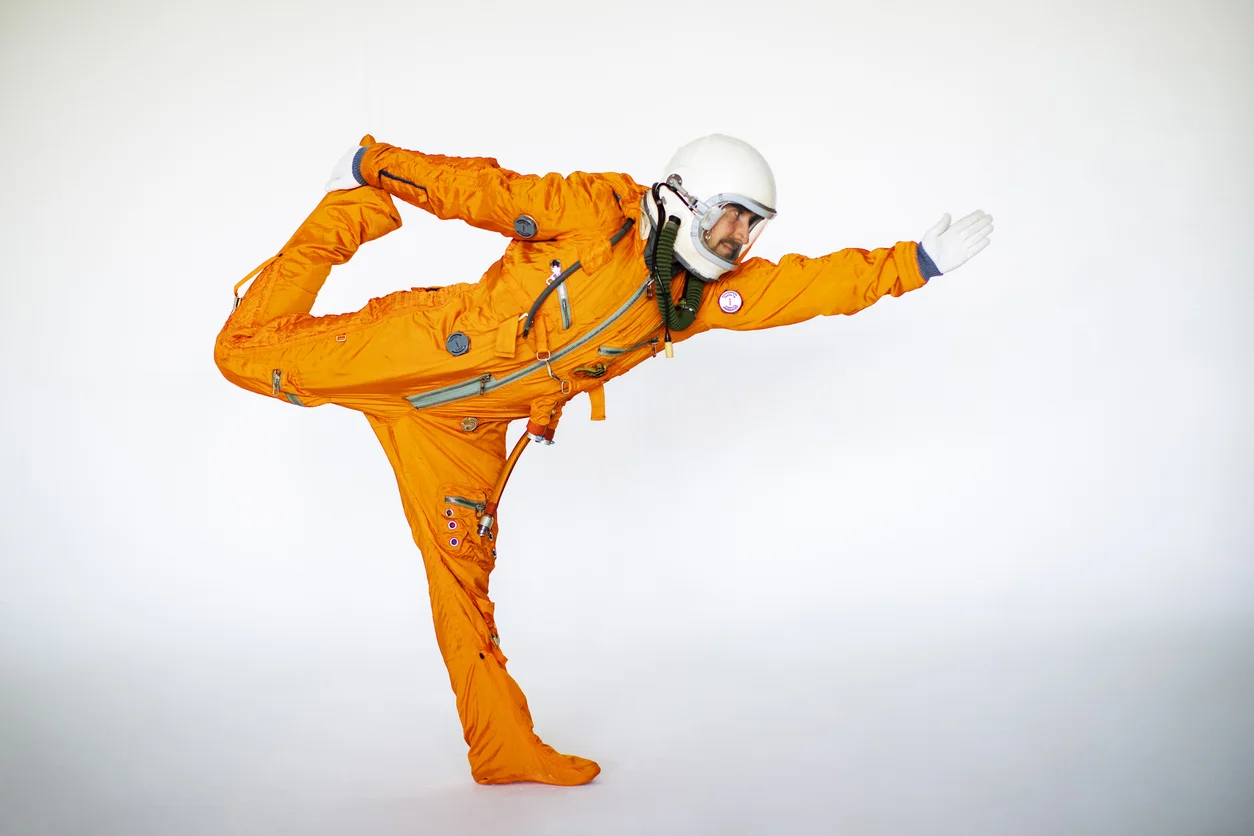
I trained under the practitioner whose framework underpins this work
Tom Myers founded Anatomy Trains, the framework that has been mapping fascia as a continuous, fluid-rich network for thirty years. I have spent over 750 hours training in Anatomy Trains Structural Integration, and I am currently a teacher-in-training under Tom, co-teaching courses with him.
This is not a trend I am chasing. It is the work I have been doing for years, on the system the rest of the world is just now noticing.
What the interstitium means if you train hard
Your fascia is not passive packaging. It is a continuous tissue from foot to fingertip, densely innervated, hydrated by interstitial fluid that moves through it like a slow river. When that flow gets restricted by old injuries, repetitive loading, or compensation patterns, you feel it as:
- Mobility loss that does not come back with foam rolling
- Asymmetries that creep back two weeks after PT
- "Tightness" that has nothing to do with muscle length
- Recovery that takes longer than it should
Stretching, massage, and rolling work on the symptoms. Structural integration works on the system.
What structural integration actually does
ATSI is a 12-session series that systematically reorganizes your fascial system in a defined sequence:
- Sessions 1 to 4 (Sleeve). Open the superficial layers. Restore the breath. Free the surface lines.
- Sessions 5 to 8 (Core). Work into the deep fascial structures. Address core support, hip mechanics, the deep front line.
- Sessions 9 to 12 (Integration). Bring it all together. Refine movement. Lock in the new organization.
You finish the series with a body that has been reorganized, not just maintained. Most clients hold the change for years.
Off-season is when bodies actually change
In-season, your body is in maintenance mode. Off-season is when the bandwidth exists for structural change. Twelve sessions, eight to twelve weeks, then you head into your competitive block with a body that has done deeper work than rest alone delivers.
This is the same logic the longevity-focused pros are operating on. The NYT covered that, too.

Where ATSI fits in your recovery stack
- Massage releases tension locally.
- PT rehabs specific injury.
- Chiropractic adjusts joints.
- ATSI reorganizes the fascial system so your body needs the others less often.
It is not better. It is different. Most serious athletes use all four.
Book a free 30-minute movement assessment
I will watch you move, ask the questions that matter, and tell you honestly whether the 12-session series makes sense for what you are after. No pitch.
Santa Cruz studio. Mobile service throughout the Bay Area.
Who this is for
Athletes who already do the work. Surfers grinding through paddle sessions. Climbers projecting at their limit. Cyclists and runners stacking miles. If your body is your tool and you want it to last, this is the work.
Questions, answered
Is structural integration the same as Rolfing?
Same family. Ida Rolf developed the original method in the 1950s. ATSI is the modern evolution, built by Tom Myers on the same principles with updated anatomical and fascial research.
How long does the full series take?
Twelve sessions, typically spread over eight to twelve weeks. Sessions run 75 to 90 minutes.
Will I be sore?
Sometimes, briefly. Most clients feel reorganized rather than beat up. The work is precise, not punishing.
Do I have to commit to all 12 sessions?
For lasting structural change, yes. For a specific issue, three to four sessions sometimes resolve it. We will talk through what makes sense at your assessment.
Will this interfere with my training?
No. Most athletes train through the series. We will time sessions around your hardest workouts.
Is this covered by insurance?
Generally no. It is a performance and longevity investment, not a medical procedure. HSA or FSA sometimes applies. Check with your provider.