Home·Services·For Cyclists and Runners
Training · Endurance Athletes

For cyclists and runners. The sport of repetition.

Cycling and running look like different sports and share a fundamental demand: thousands of reps of hip flexion, in a narrow range, under load, for hours. That repetition is what produces the distinct cluster of injuries both sports keep generating.

The underlying sport.

A decent local ride on Empire Grade is about ten thousand pedal revolutions. A ten-mile run on West Cliff is about fifteen thousand steps. Both sports, under the hood, are the same biomechanical task repeated many thousands of times: the hip flexes, force is produced, the hip extends a little, the hip flexes again. The variation between reps is small. The total dose is enormous.

Tissue responds to dose. When you repeat a narrow pattern ten thousand times in an afternoon, tissue adapts toward that pattern. Muscles not used in it get quiet. Muscles used heavily get chronically short. Fascia reorganizes to support the exact motion the sport rehearses. The capacity gets specific. So do the costs.

The injuries endurance athletes get aren't random, and they aren't bad luck. They're the predictable output of a narrow pattern practiced at high volume.

The specific adaptations the sport produces.

Short, neurologically dominant hip flexors.

Both sports drive the knee up thousands of times per session. The hip flexor complex, psoas, rectus femoris, iliacus, TFL, gets strong at its job and short in its resting length. Sitting for the non-riding hours reinforces the shortening. Over years, the pelvis tips forward, the lumbar spine extends to compensate, and the low back starts complaining on long rides.

Quiet glute max.

The glute max should provide most of the hip extension power. For endurance athletes with chronically short hip flexors, the glute often doesn't fully activate because the hip never reaches neutral extension where the glute would otherwise fire. The hamstrings pick up the work. This is why endurance athletes often have hamstring tightness that refuses to release: the hamstring is substituting for a glute that's neurologically offline.

Weak lateral hip stability.

Cycling and running are primarily sagittal-plane (forward and back). The glute medius and deeper hip stabilizers, which manage lateral pelvic position, get relatively little targeted training. Under fatigue, usually somewhere between miles six and ten of a run, these stabilizers tire and the pelvis drops on the swing-leg side. The knee falls inward on the stance side. The IT band gets pulled through the knee rather than gliding cleanly. Welcome to ITBS.

Restricted ankle and foot.

The ankle that runs or rides five days a week gets efficient at a narrow range of motion, usually into plantarflexion for push-off. Dorsiflexion range tends to drop unless deliberately trained. Foot intrinsics atrophy from shoes and sedentary hours. This compounds into plantar fasciitis, Achilles tendinopathy, and the chronic calf tightness that feels like a stretching problem and isn't.

Thoracic stiffness.

Cyclists hold a fixed thoracic flexion position for hours. Runners don't, but the forward-head posture of modern life plus the sustained arm carriage of running tend to produce similar stiffness. The upper back loses rotation, breathing gets more shallow, the lower back picks up the stabilization load. Cyclists often describe this as "riding posture fatigue." It isn't posture fatigue. It's rib cage compliance failing under load.

The injury cluster, and what each is actually saying.

IT band syndrome: lateral hip stability failure, usually under fatigue. Not a tight band to stretch. A weak and dormant glute medius to train.

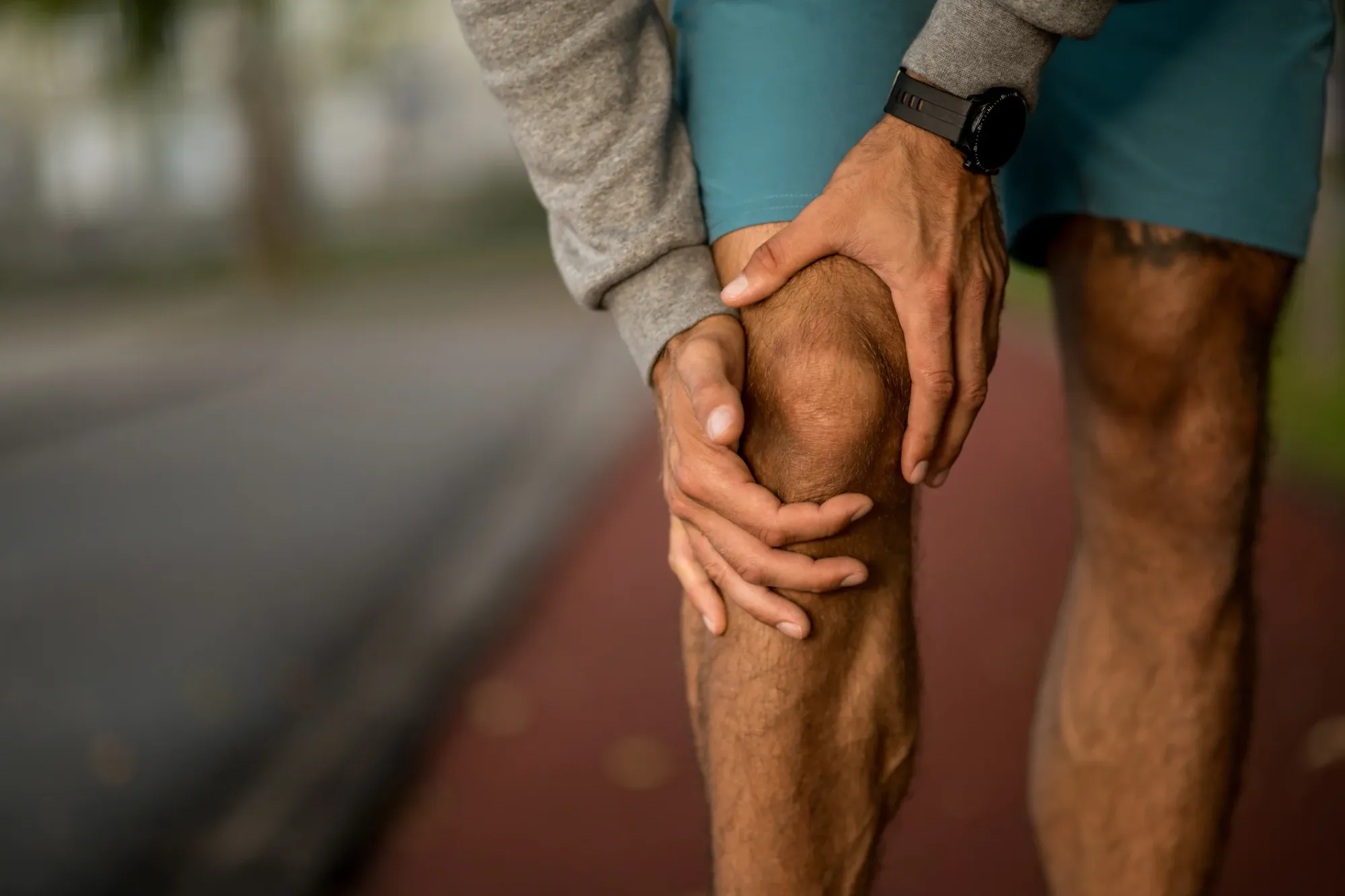
Runner's knee (patellofemoral pain): typically hip control failure at the knee, with the femur rotating inward under load and the kneecap tracking poorly. Hip work solves most of this. Quad strengthening alone rarely does.

Hip flexor pain: usually the compensation pattern catching up with you. The hip flexor has been asked to be on for too many hours and now it's protesting. The fix involves both releasing the tissue and restoring hip extension, because a short hip flexor that's never asked to reach neutral stays short forever.

Plantar fasciitis and Achilles: usually a combination of calf tightness, lost ankle dorsiflexion, and upstream hip issues distributing load wrong. There's a whole page on the loading-pattern framing at plantar fasciitis and loading patterns and it's worth reading for runners specifically.

Lower back pain on long rides or after long runs: usually anterior pelvic tilt from short hip flexors combined with insufficient glute engagement. Lumbar spine picks up the bill. The fix is upstream of the pain, in the hip.

What actually changes.

The work that helps endurance athletes isn't different in kind from general structural work. It's specific in emphasis. Restoring hip extension range through hands-on fascial work. Waking up the glutes neurologically so they actually fire during your sport. Building lateral hip strength and endurance so the stabilizers don't bail under fatigue. Restoring thoracic rotation and real breath mechanics so the rib cage is contributing rather than stiffening. Rebuilding ankle range and foot function.

Structural Integration is the twelve-session fascial series that addresses the tissue-level adaptations endurance sports create. Most endurance clients feel the difference inside the first few sessions, often as more comfortable breathing during training and less of the nagging tightness they had come to accept.

The movement-retraining piece runs alongside. Specific drills for glute activation, lateral hip strength, and gait retraining for runners. Hip mobility protocols for the hours off the bike or the road. Breath work for rib cage compliance. Most of this doesn't add training time; it replaces some of the junk-volume training most endurance athletes are already doing.

For the Santa Cruz endurance scene.

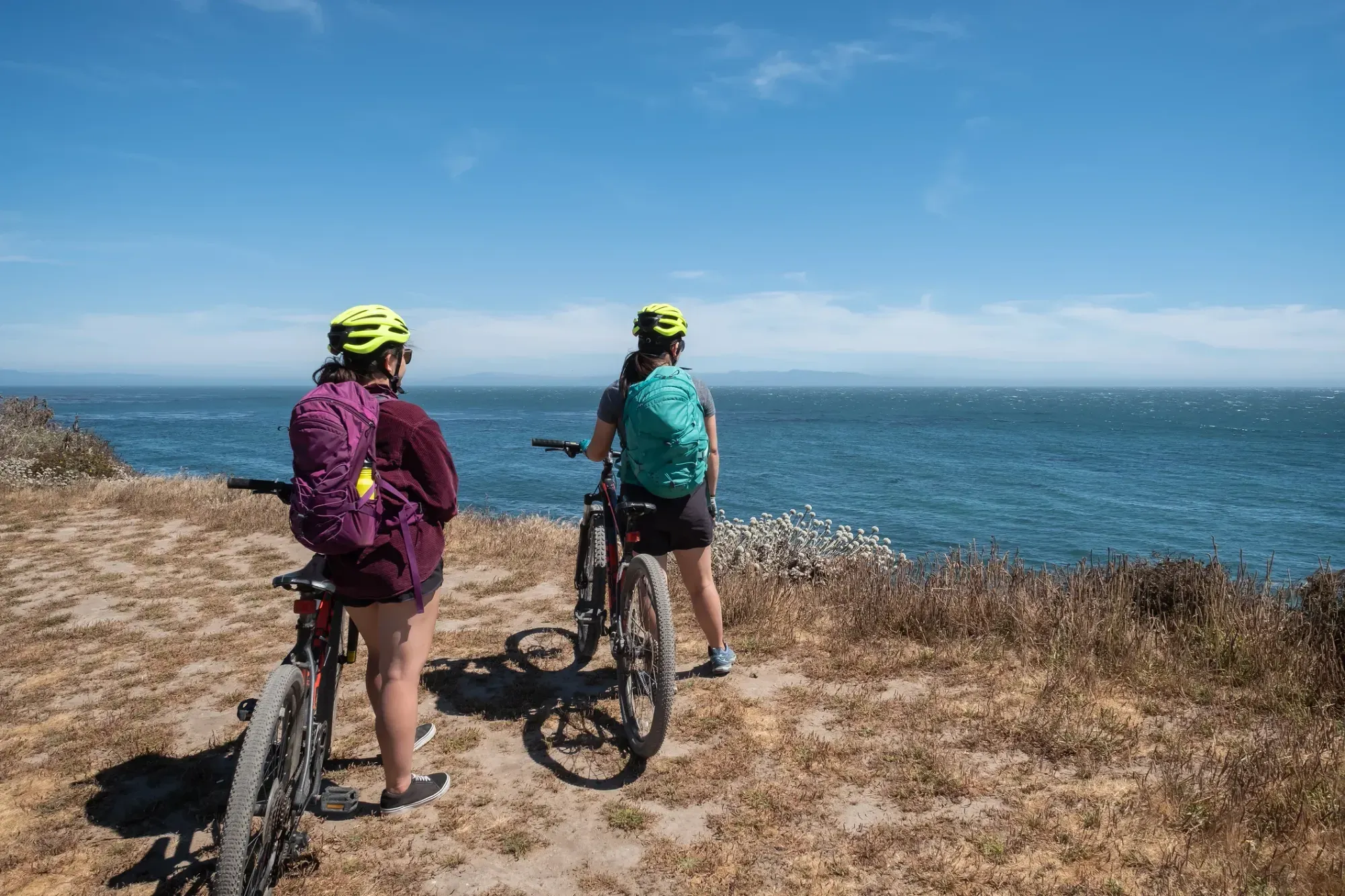
Our local terrain is generous and punishing. Empire Grade is a legitimate climb. Wilder Ranch has miles of varied running and riding. The West Cliff loop is a classic. And we have year-round trail access that lets local athletes put in serious annual volume. That same volume makes the repetition-based adaptations I described particularly pronounced. Local athletes tend to arrive in the office with five to ten years of accumulated pattern already running, which means the work often produces noticeable change quickly.

If you've been managing the same recurring injury for a season or more, a Body Systems Check is where I'd start. I'll read your pattern, put hands on where it matters, and tell you honestly whether the injury is upstream of where you've been treating it.

Frequently Asked

Questions, answered.

I cross-train between cycling and running. Does that help or hurt?

+

Helps, usually. The two sports share most of their demands but distribute load slightly differently. Running loads the posterior chain more aggressively and the hip more dynamically. Cycling loads the quads more and the hip flexors more. Doing both tends to produce a more balanced athlete than doing either alone. The main risk is double-dipping on volume without realizing it, because both feel low-impact enough that the weekly total can sneak up. Track total load across both, not per-sport.

My IT band flares up predictably at mile eight. What's happening?

+

Your glute medius is fatiguing. The IT band itself isn't a contractile structure; it's passive tissue that tightens up when the lateral hip stabilizers can't keep up with the demand. Up to mile six or seven, the glute medius is holding your pelvis level. Around mile eight, it fatigues, the pelvis drops slightly on each step, the tensor fasciae latae picks up the stability work, and the IT band gets pulled through the knee rather than gliding cleanly. Training the lateral hip specifically and releasing the lateral chain tissues tends to push that fatigue point out meaningfully.

I'm a cyclist and my lower back kills me after rides over two hours. Is that fixable?

+

Almost always. Most long-ride lumbar pain is the hip flexors being forced to stay short in the aero position while the glutes are asked to produce power. Short hip flexors pull the pelvis into anterior tilt, which jams the lumbar facets. After two hours of jammed facets, your back is screaming. The fix is restoring hip extension range off the bike and training the glutes to maintain pelvic position while loaded. Bike fit matters too, but usually less than the underlying mobility.

I've been told I overpronate. Should I get orthotics?

+

Possibly, but often as a short-term tool rather than a permanent one. Over-pronation is usually not a foot structural problem; it's a hip control problem expressing at the foot. If the hip doesn't stabilize the femur, the knee collapses inward, the arch collapses with it, and the foot pronates past the point where it should stop. Orthotics prop up the arch, which reduces the symptom. Addressing the hip lets the foot stop pronating on its own, which is what most people actually want.

Train for the long haul.

Twenty minutes, complimentary.

Book a Free Consultation Book a Session