That stabbing pain on the outside of your knee
It started a few miles into your run. Sharp pain on the outside of your knee. You tried to push through it, but it got worse. Now it hurts every time you run, especially going downhill. Sometimes even walking down stairs triggers it.
You've been foam rolling your IT band religiously. It's incredibly painful, but you've been told this is how you resolve it. Weeks of brutal foam rolling later, the pain is still there. Maybe you've tried rest. The pain goes away, but returns the moment you start running again.
Here's the truth: Your IT band isn't the problem. It's the victim. And foam rolling it is mostly pointless.
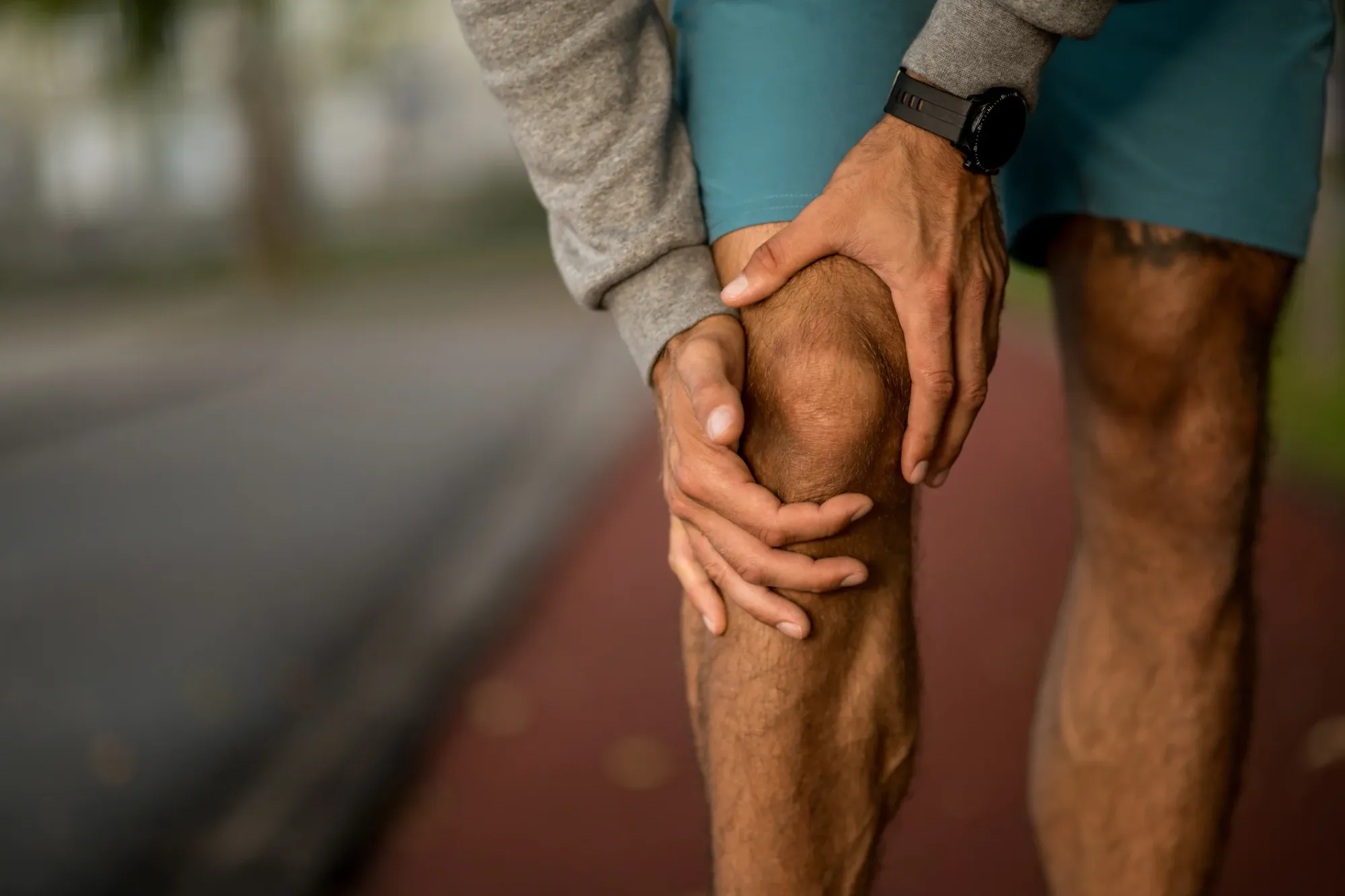
What actually causes IT band syndrome
Your IT band (iliotibial band) is a thick strip of fascia running from your hip down the outside of your thigh to just below your knee. It doesn't really "get tight" in the way muscles do. It's a stabilizing structure, not a muscle.
The real issue: IT band syndrome (ITBS) is almost always caused by weakness and poor mechanics at the hip, creating excessive friction where the IT band crosses your knee.
Weak glutes (especially glute medius)
Your glute medius stabilizes your pelvis when you're on one leg (like when running). When it's weak, your hip drops on the non-weight-bearing side. This creates a chain reaction: your femur rotates inward, increasing tension on the IT band, and creating friction at the knee. This is the primary cause of ITBS.
Hip adductor tightness
Tight inner thigh muscles (adductors) pull your femur into internal rotation and adduction. Your IT band and hip abductors (TFL and glutes) have to fight against this constantly, creating overuse and irritation.
TFL overactivity
Your TFL (tensor fasciae latae) is a small hip flexor and abductor muscle that connects to the IT band. When your glutes are weak, your TFL compensates and becomes overactive and tight. This increases tension on the IT band. Releasing the TFL is important, but strengthening glutes is more important.
Training errors
Too much too soon. Excessive downhill running. Running the same direction on a cambered road (one leg always lower). These create excessive stress before your body adapts.
Poor running mechanics
Overstriding, excessive hip drop, crossover gait (feet crossing midline), sitting in the hips. All of these increase IT band stress at the knee.
Why foam rolling your IT band doesn't work
Your IT band is incredibly tough: It's designed to be a strong, stable structure. The amount of force needed to actually change its length or tension would require thousands of pounds of pressure. You're not creating meaningful tissue change with a foam roller.
It's not really "tight": The IT band doesn't have muscle fibers. It can't contract and relax like a muscle. The perceived "tightness" is actually increased tension from other structures (TFL, weak glutes, poor mechanics) pulling on it.
You're treating the symptom, not the cause: Even if foam rolling provided temporary relief (by stimulating nerves or reducing perceived tightness), you haven't addressed why the IT band is under excessive tension in the first place.
What does help: Releasing your TFL, adductors, and hip flexors. Strengthening your glutes. Fixing your running mechanics. Addressing the actual problems.

My approach to IT band syndrome
1. Release the actual tight structures
Through Structural Integration:
- Deep TFL release (this muscle needs hands-on work)
- Release tight hip adductors
- Work tight hip flexors pulling your femur forward
- Address lateral hip and glute restrictions
- Free up fascial adhesions throughout the leg
2. Strengthen what's weak
Movement training to address root cause:
- Glute medius strengthening (critical for ITBS)
- Hip stability exercises
- Single-leg strength and control
- Proper glute activation patterns
- Progressive loading to build capacity
3. Fix running mechanics
- Reduce excessive hip drop
- Improve stride mechanics
- Address crossover gait if present
- Better hip extension in your stride
- Proper cadence and foot strike
4. Smart return to running
- Gradual progression (no sudden jumps in mileage)
- Avoid excessive downhill initially
- Cross-training to maintain fitness
- Monitor symptoms and adjust accordingly
What self-care actually helps
Foam rolling TFL and hip flexors: Yes, this helps. Work the area at the front and side of your hip, not down your IT band.
Glute activation exercises: Clamshells, side-lying hip abduction, single-leg bridges. Build that glute medius strength.
Hip flexor and adductor stretching: These are often tight and need regular stretching.
Reduce training volume temporarily: Let inflammation settle while you address the underlying issues.
Foam rolling the IT band itself: Not harmful, but not addressing the problem. Your time is better spent elsewhere.

Recovery timeline
Mild ITBS (caught early): 4 to 6 weeks with proper treatment.
Moderate ITBS (several months of symptoms): 8 to 12 weeks.
Chronic ITBS (persistent, recurring): 3 to 6 months of consistent work to address all contributing factors.
The key is addressing the actual causes (weak glutes, tight hip structures, poor mechanics), not just resting until pain goes away.
What running pain-free looks like
- No more knee pain when running
- Handle downhills without issues
- Increase mileage without flare-ups
- Better running efficiency
- Stronger, more stable hips
- Improved running mechanics
- Return to training goals
- Confidence in your body
For Santa Cruz runners and cyclists
Whether you're trail running in the redwoods, road cycling around the bay, or training for your next race, IT band syndrome doesn't have to sideline you. Address the actual causes through hands-on work and proper strength training, and get back to doing what you love.