Training for surfers, Santa Cruz
Santa Cruz surfers handle a specific cocktail of demands: long cold-water paddles, explosive pop-ups on often-slow boards, rotational control on the face, and a local lineup that punishes hesitation. The training has to match.
The paddle
The paddle is the most underrated biomechanical demand in surfing. A session at Steamer Lane can include thirty minutes of cumulative paddling. A point break day at Pleasure Point can include twice that. Every stroke is an overhead shoulder reach, a pull through the water, and a recovery, thousands of times per session.
The shoulder complex can handle this work indefinitely if three things are true. The thoracic spine rotates freely. The scapula glides along the rib cage the way it should. The rotator cuff fires on time to keep the humeral head centered in the socket. When any of those three fails, the larger muscles, lats, pecs, deltoids, start doing the positioning work the cuff should do, and the joint gets compressed in ways it wasn't designed for.
That's where surfer's shoulder comes from. Impingement, bursitis, rotator cuff tendinopathy, sometimes a labral tear. The proximate cause is always paddling. The underlying cause is almost always upstream, in the thoracic spine and the scapular pattern. Fix those and the shoulder often stops being the limiting factor in your sessions.
The pop-up
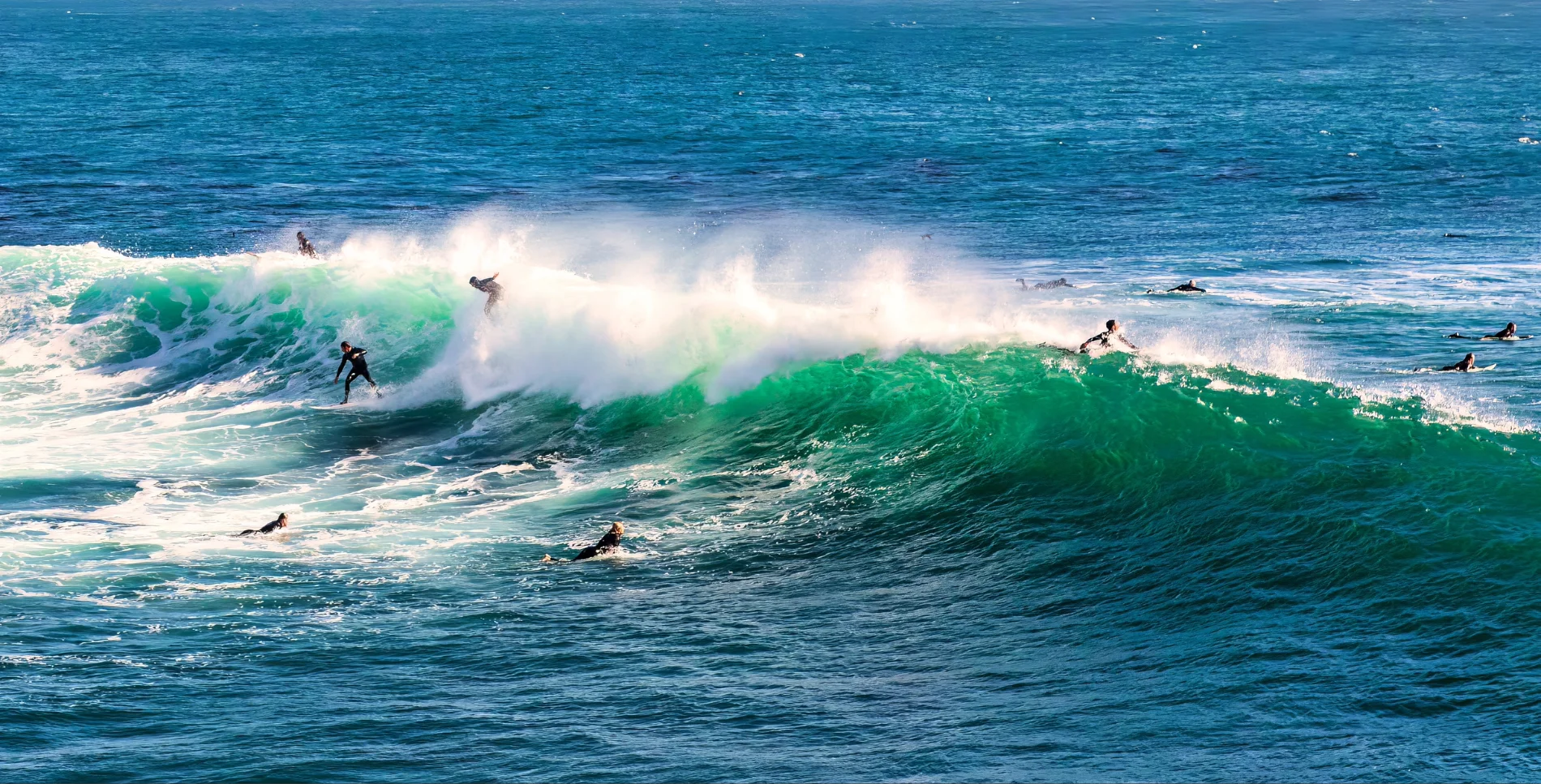
The pop-up is a compound power movement disguised as a pushup. It asks for explosive hip extension, thoracic rotation, single-leg stability, and precise foot placement, all in under a second, often after a long paddle under fatigue, frequently in three feet of water with a wave breaking overhead.
The most common thing that goes wrong isn't weakness. It's sequencing. The hips should drive the body off the board. The arms should just help the chest come up while the legs find their spots. If your hips can't extend cleanly, the arms end up doing most of the work, and you pop up slow, arms-first, with your feet landing too narrow and too far back. The wave's already past you, or you're taking a bad drop.
Clients who retrain the pop-up from the hips out, rather than from the arms down, often describe the wave feeling different. You catch earlier. You have more time. The line opens up because you're on your feet a half-second sooner.
Rotation on the wave
Once you're up, the wave becomes a rotational demand. Every bottom turn, every cutback, every top turn is the thoracic spine and the hips cooperating to point the board where your eyes are already looking. The shoulder rotation leads, the ribs follow, the pelvis follows, the board follows.
When the thoracic spine is stiff, which it is for most desk-working surfers, the rotation has nowhere to come from and the low back takes over. The lumbar spine rotates in a plane it wasn't designed to rotate much in. This is where the classic surfer's low back pain comes from, especially on longer sessions. It's not the arching during paddling, though that's a factor. It's the lumbar spine doing the rotational work the thoracic spine refused to do.
Restoring thoracic rotation is usually the single biggest intervention for surfers with chronic low back complaints. Hands-on fascial work on the lats, the pecs, the serratus, and the intercostals tends to free up that rotation faster than stretching.
The cold water factor
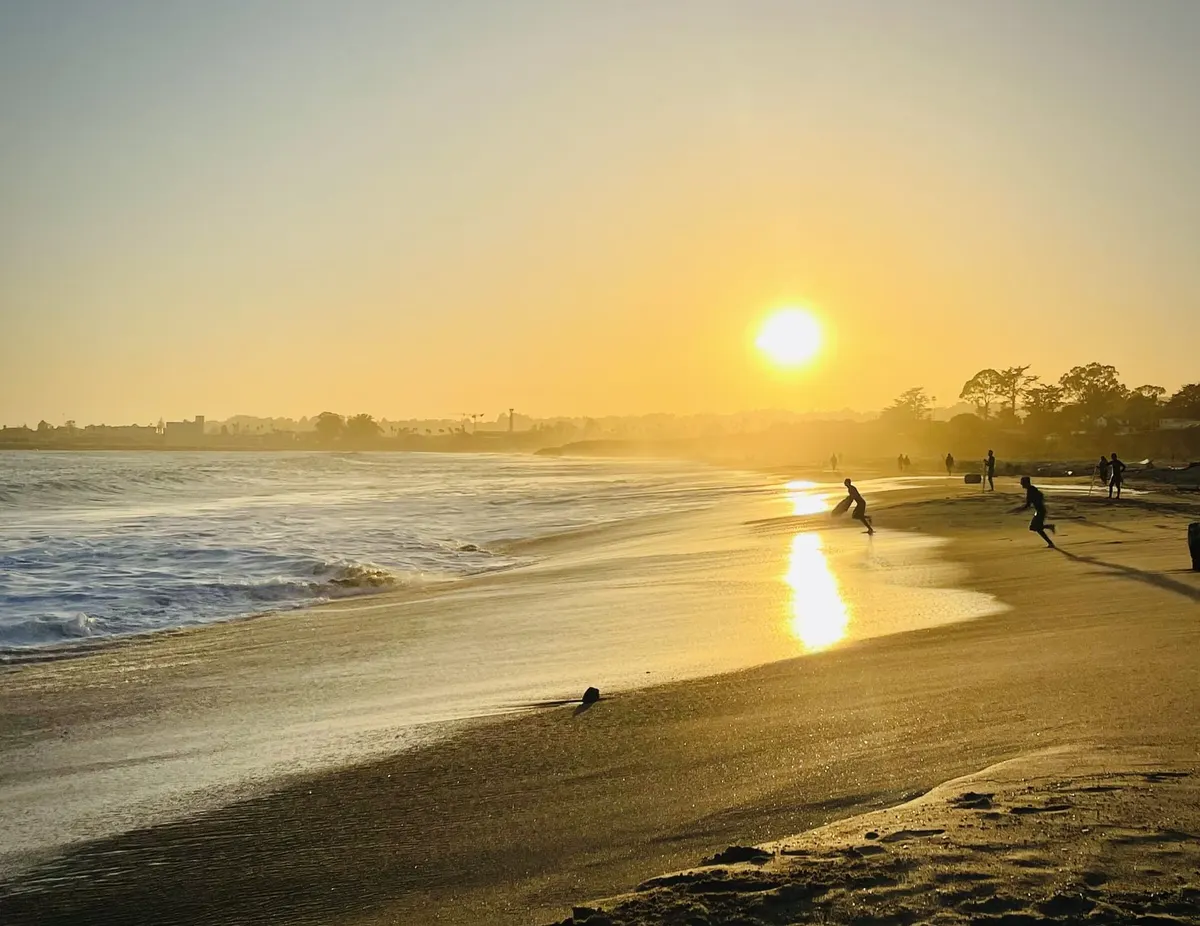
Santa Cruz surfers are in water that's usually between fifty and fifty-eight degrees. Cold water is a training variable most sport science ignores. It causes the tissue to tighten, the breath to shorten, the nervous system to brace, and the thermogenic cost of every movement to rise. A three-hour session in cold water is physiologically different from a three-hour session in warm water, and the body pays more for the same output.
This is why warm-up matters disproportionately here. Most surfers skip it entirely. A decent warm-up before getting in the water, five or ten minutes of thoracic rotations, hip openers, shoulder circles, and active breathing, lowers the injury risk more than any post-surf stretching will. The tissue that goes into cold water already warm and mobilized handles the first thirty minutes very differently than the tissue that goes in cold and tight.
What we work on, for surfers specifically
The priorities vary by what you surf and what's already giving you trouble, but the common list is short and consistent. Thoracic mobility in rotation and extension. Hip mobility in flexion and internal rotation. Glute function for the pop-up. Scapular control for paddling. Core endurance rather than core maximum, because sustained paddling is an endurance demand. And breath. Particularly the ability to keep breathing well under cold-water stress, which most people don't realize they've lost until it's tested.
Structural Integration addresses the fascial components of these patterns across the twelve-session series.Movement coaching rebuilds the motor patterns, often with specific surf-mimetic drills on land: pop-ups at various speeds, rotational work with a pole, paddling with a slider board. Clients tend to feel the change on the wave before they feel it anywhere else, because the wave is an honest teacher.
If you want to see what's limiting your surfing
A Body Systems Check is one appointment. I'll watch you simulate a paddle, a pop-up, and a basic rotational turn, put hands on the tissue that's restricted, and tell you specifically what's between you and the sessions you want to be having. You leave with a read and a plan. No commitment to the full series unless it's the right fit.
Questions, answered
Can you work with me if I'm surfing year-round?
Yes, and that's often ideal because the feedback loop is short. Surf, notice what's stiff or tired, come in, work it, surf again. Clients who keep surfing through our work usually feel changes on the water inside the first three or four sessions. What I'll sometimes ask is that you adjust the kind of surfing you do for a couple of weeks, shorter sessions, friendlier waves, less paddle-into-crowds, while we release the pattern that had been bothering you.
I'm a longboarder in my fifties. Is this still relevant?
Particularly relevant. Longboarding at fifty demands paddle endurance, cross-step stability, nose-riding balance, and the ability to pop up cleanly from prone without torquing the back. The movement demands are less explosive than shortboarding but more sustained, which has its own tissue consequences. Most of the longboard clients I see are dealing with nagging low-back or shoulder issues that have persisted for years. Those tend to respond well, because the underlying patterns are usually hip-related and the fix is straightforward once we identify it.
I mostly surf Steamer Lane and Pleasure Point. Does the break matter?
Some. Point breaks and reef breaks mean long paddles and long rides, which rewards paddle endurance and sustained rotational control. Beach breaks reward explosive pop-ups and quicker direction changes. I'll ask what you surf most, because the biomechanical demands differ enough that they shape how we program. Steamer Lane paddles, in particular, are among the longer ones in Santa Cruz and they punish any shoulder or thoracic restriction you've been ignoring.
My knees are getting cranky from popping up. What should I look at?
The knees are almost always paying for a hip or ankle somewhere else in the pop-up. The explosive extension that drives you to your feet should come from the hips. If the hips don't extend fully, the knees have to do it, usually with a quick valgus collapse that irritates the joint over time. We'd look at hip mobility, specifically extension and internal rotation, and at whether the ankle on your back foot is actually dorsiflexing or whether you're driving through a stiff ankle and asking the knee to make up the difference.