What is movement education?
Movement Education is a smarter way to exercise. We do real workouts, but they are not just about reps. The priority is excellent form, muscle activation, and alignment, so you build strength, not tension, in everyday functional movements.
My approach to movement
Most training focuses on what you are doing. I focus on how you are doing it.
Slow and methodical
We are not rushing through sets. We are exploring movement patterns, finding where you are compensating, and teaching your nervous system a better way. Speed comes later, precision comes first.
Practicing great movement
Every rep is practice. You are not just building strength, you are building skill. Good movement is a learnable skill, and like any skill, it takes deliberate practice.
Finding your alignment and core strength
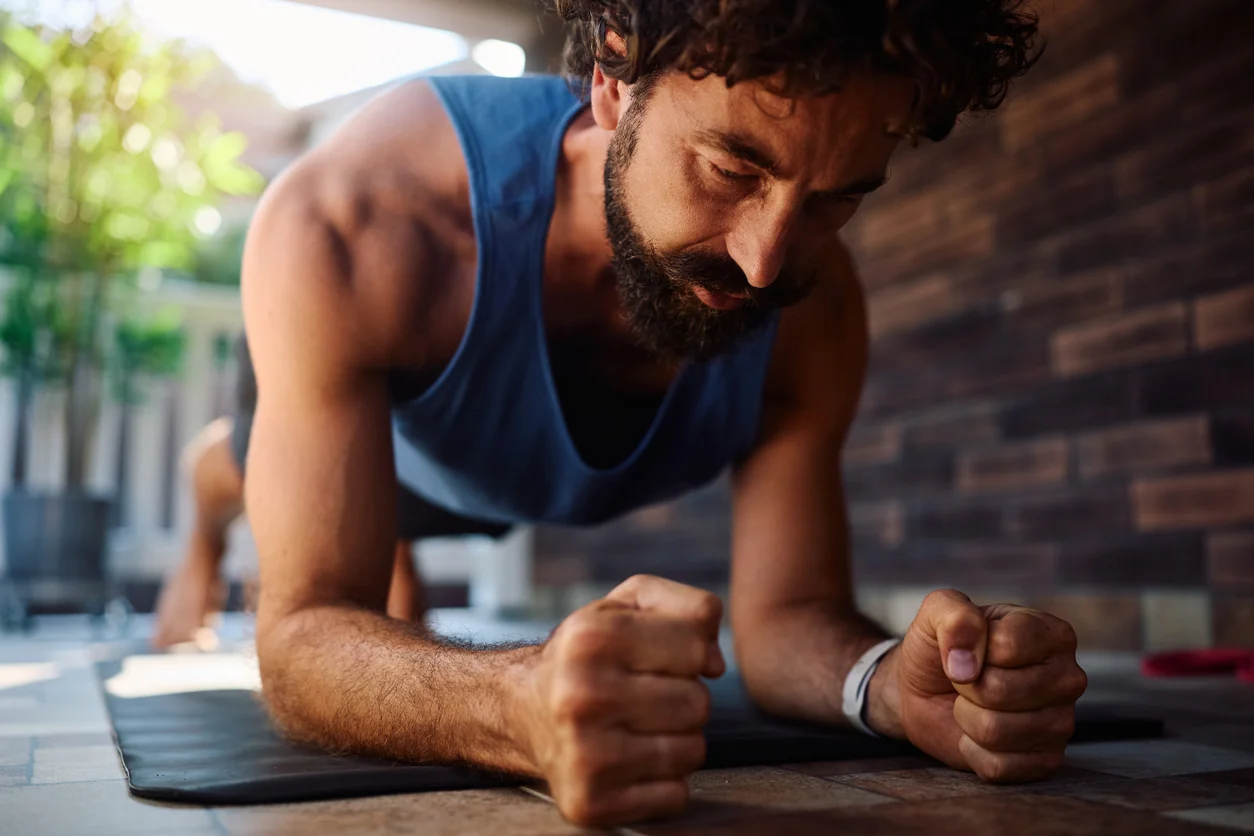
True core strength is not about planks and crunches. It is about finding your center, connecting your breath to your movement, and building stability from the inside out.
Building from the inside out
We start with foundation: breath, alignment, basic movement patterns. Once those are solid, we build complexity. You cannot build a strong house on a shaky foundation.
What you will learn
- How to breathe with your movement. Most people hold their breath when they lift, squat, or reach. You will learn to use your breath as a tool for stability and power.
- How to find and use your core. Not the six-pack muscles, the deep stabilizers that actually support your spine and pelvis.
- How to move without compensation. You will learn to feel when you are cheating a movement and how to correct it in real-time.
- How to get every muscle involved. Take the squat. We push the feet into the ground to wake up the deep front line from the arches up, so the pelvic floor, deep core, and diaphragm all work with you. Same movement, far more support.
- How to build strength that transfers. You are not training for the gym. You are training for life. Every movement pattern we work on will make your daily life easier.
- You have been training but keep getting injured
- You want to move better, not just move more
- You are tired of compensating and want to address the root issue
- You value quality over quantity
- You are willing to slow down to build something lasting
How sessions work
Assessment
We start by watching how you move. Where do you lose stability? Where do you compensate? What patterns need attention?
Movement work
We will work on 2 to 3 movement patterns per session. I will teach you what to feel for, how to self-correct, and how to practice effectively.
Practice plan
You will leave with simple practices you can do daily. Not hour-long workouts. 5 to 10 minutes of focused movement that builds the patterns we worked on.
The bottom line
It is not flashy and it is not quick. But when you move well, training becomes more effective, pain decreases, and life gets easier. That is the promise.
Clients on the work
“I'm a physical therapist. I absolutely recommend his work. The amount of training he has is leagues beyond what people think a personal trainer has.”
“Rock is an encyclopedia of anatomy knowledge with deep intuition on how to help people move through their physical challenges. The strength and comfort I've developed has exceeded my expectations.”
“Rock's manual therapy found and addressed tension I wasn't even aware was affecting my structure. He offered expert movement insight that lets me continue the work in my daily practice.”
Questions, answered
Is Movement Education the same as personal training?
Yes, but evolved. I started as a personal trainer and kept learning until I developed a thorough practice for people who just want to live better and more comfortably in their body. I teach strength, core stability, mobility, coordination, awareness, balance, and flexibility. But the foundation comes first. We set the foundation through quality movement, then build from there.
Can I combine Movement Education with my workout routine?
Absolutely. In fact, that's the point. Movement Education makes your training more effective and sustainable. You'll move better, lift with better form, and reduce injury risk. Most clients continue their regular workouts while working with me. We just clean up how you're moving.
Why do we train barefoot?
Your feet are your foundation. Shoes mask problems and prevent your feet from doing their job. Training barefoot lets you feel the ground, activate the small stabilizing muscles in your feet, and build real stability from the ground up. If you have foot issues, dedicated gym-only shoes are welcome. Just no outdoor shoes in the gym.
Do I need to be in shape to start?
No. We meet you where you are. Movement Education isn't about crushing yourself. It's about learning to move well. Whether you're deconditioned, injured, or highly trained, we start with quality movement and build from there.
What if I have an injury or recurring patterns?
We work with it. Movement Education can help you move better despite limitations, and Structural Integration often helps address the underlying structural imbalances. I'm not treating your injury, but we can work with your body to improve function and reduce compensation patterns.
How often should I come for Movement Education sessions?
Most clients come 2-3 times per week for ongoing movement work. This frequency allows for consistent practice and progressive improvement. For maintenance after initial training, monthly or quarterly sessions can keep you on track. We'll figure out what makes sense for your body and schedule.
What should I wear for Movement Education sessions?
Wear comfortable workout clothes that allow you to move freely. You'll be moving, not just lying down. We train barefoot, and your feet are your foundation. If you have foot problems, dedicated gym-only shoes are fine (no outdoor shoes allowed). Avoid restrictive clothing that limits your range of motion.
How long are Movement Education sessions?
Movement sessions are typically 60 minutes. This gives us time to assess, work on 2-3 movement patterns, and create a practice plan. Some clients prefer 30-minute focused sessions for specific issues, or 90-minute sessions that combine movement work with Structural Integration.
How much does Movement Education cost?
Sessions start at $120 for 30 minutes, $210 for 60 minutes, $315 for 90 minutes, and $420 for 120 minutes. Multi-session packages save 10-20%.