Strength training for surfers in Santa Cruz
Most surf fitness programs hand you generic strength work and miss the part that actually limits you: how your structure organizes a paddle stroke and a pop-up. I coach surfers to build strength through better movement, not just more reps.
What the surfing body actually needs
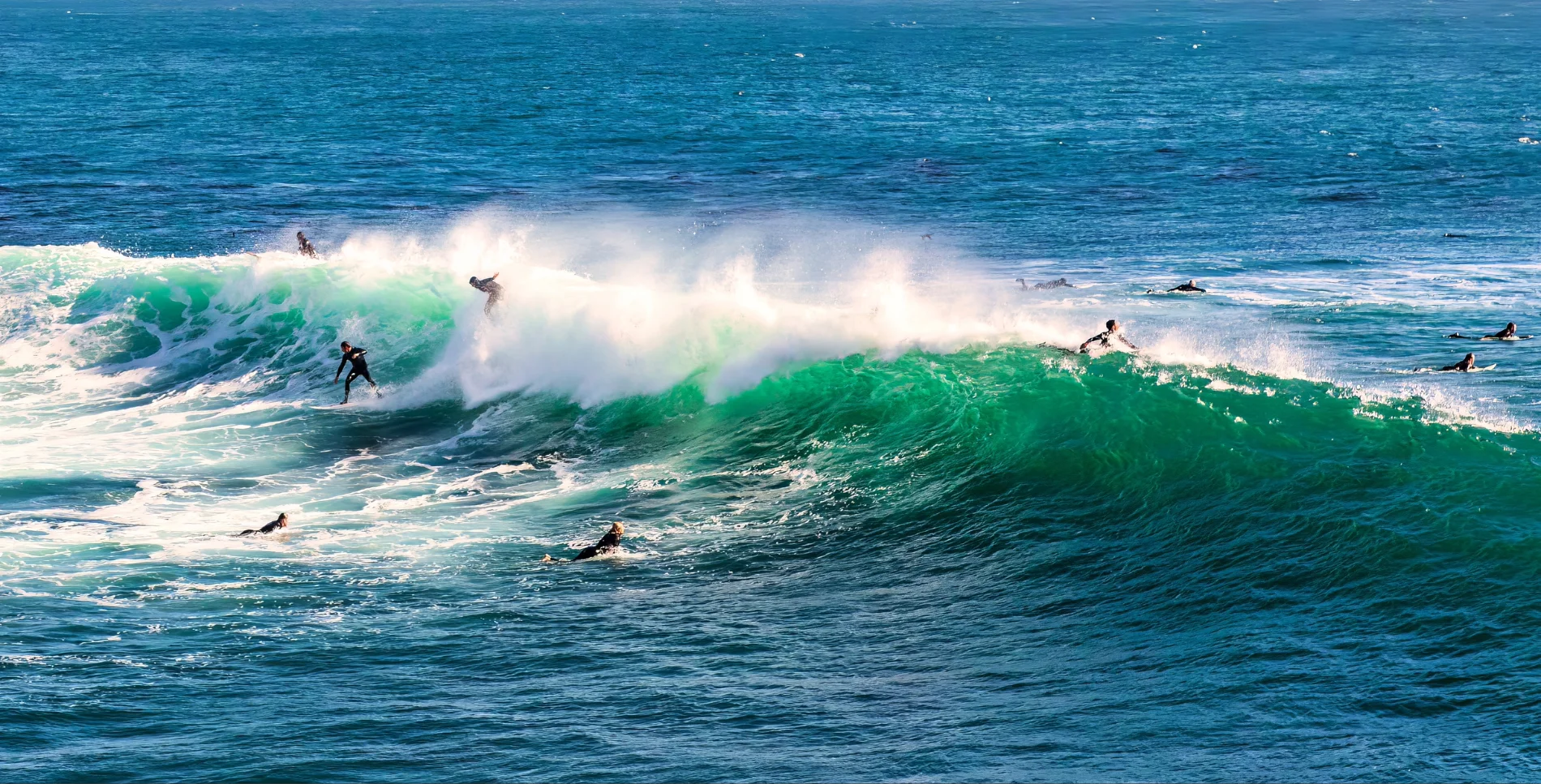
Surfing is not a strength sport in the way a gym thinks about strength. It is endurance, rotation, and the ability to brace and explode from odd positions on an unstable surface. When I watch surfers train, most of what they are sold misses that entirely. They get bench presses and bicep curls, and then they wonder why their paddling still gases out and their pop-up is still slow.
The body that surfs well has a few specific qualities:
- Thoracic rotation. Every paddle stroke and every turn comes through the mid-back. If your thorax does not rotate, the movement gets borrowed from your shoulder and your low back, which is how things start to ache.
- Shoulder endurance. You do not need a huge bench. You need shoulders that can paddle for an hour without the cuff taking load it was not built for. That is endurance and positioning, not max strength.
- Hip and posterior-chain power. A fast pop-up is a hinge. It comes from the hips and the back of the body, not from cranking the spine. Train the hinge and the pop-up gets quicker.
- Breath. The diaphragm sets your rib position and your endurance under load. A surfer who cannot breathe well into the back of the ribcage runs out of paddle long before the legs are tired.
Why reps and sets alone do not get you there
Generic strength work assumes the limit is how much force you can make. For most surfers, the limit is how well your structure organizes the movement in the first place. You can add weight to a broken pattern all day and the only thing that gets stronger is the compensation. That is how people end up strong in the gym and still beat up in the water.
Pattern-based training flips the order. Instead of counting reps, we look at how you actually produce a paddle stroke and a pop-up, find where the movement is leaking or compensating, and load the pattern once it is clean. The strength then has somewhere useful to go. It shows up as longer paddling and a faster pop-up, not as a number on a bar that never transfers to the ocean.
Why structure comes first
Here is the part most surf fitness skips. If your thorax is stiff or your hips are restricted, no program will train rotation you do not have. The body cannot strengthen a range it cannot reach. So before I pile load on, I make sure the structure can actually move. When something is genuinely stuck, hands-on structural work clears it so the training has a real foundation. When the issue is the pattern rather than the tissue, we coach it directly.
This is why I do not separate strength from structure. Most coaches do one. I build the movement, free what is restricting it, and load it, all in the same approach. If you want the deepest version of clearing the structural limits before a big push of training, that is what the 12-session series is for.

What coached movement looks like week to week
A typical block starts with a free assessment so I can see how you move and where your limits actually are. From there, sessions blend a few things: drills that restore thoracic rotation and shoulder positioning, hinge and posterior-chain work for a faster pop-up, breath work that builds your paddling engine, and loaded movement once the pattern holds. I coach it in person so I can correct what an app never sees.
You do not need to live in a gym. One or two focused sessions a week is usually enough to feel it in the water within a few weeks. The whole point is to give you a small amount of the right work so you can spend more time surfing and less time hurting. If you want to see how this is built specifically around surfing, the surf training page goes deeper, and the movement training page covers the broader coaching approach.
Why work with me
Most people who train surfers do one thing. A trainer builds strength. A bodyworker frees tissue. I do both, and that is the difference. I am certified in Anatomy Trains Structural Integration with more than 750 hours of training, I am a teacher-in-training under Tom Myers, and I am a NASM certified personal trainer and corrective exercise specialist. I have spent time in the dissection lab learning how fascia actually connects, so the map I work from is the real one.
That means I can reorganize your structure with hands-on work and then teach your body to hold the change with coached movement. Studio in Santa Cruz, mobile sessions across the Bay Area. Direct, honest, and built around what your body actually needs instead of a template.
Build a program that shows up in the water
If your training is not making you a better surfer, it is the wrong training. Let me watch you move and build something that actually transfers to paddling and popping up.
Questions, answered
How is this different from a generic strength program off an app?
An app hands you the same template as everyone else and never sees you move. I coach you in person, watch how your structure organizes a paddle stroke and a pop-up, and build strength into the patterns that actually limit you. The lifts matter less than how you produce force through a body that rotates and braces well.
Do I need to be in a gym for this?
No. I run sessions at my Santa Cruz studio and mobile across the Bay Area. The work is movement-led, so it travels. We use load when load is the point, but a lot of the early gains come from teaching your structure to move before you pile weight on top.
Will lifting make me stiff and slow on the board?
It makes you stiff and slow when it is bad training: max grinding, no rotation, no attention to how you actually move. Pattern-based strength does the opposite. We build thoracic rotation, shoulder endurance, and hip power so you paddle longer and pop up faster, not so you can post a bench number.
I get beat up after long sessions. Can training fix that?
Often, yes. A lot of post-session soreness is not just volume, it is a body compensating through the wrong tissue because the structure is restricted. Training the right patterns, and freeing what is stuck when it needs it, means you absorb the work better and recover faster.
Do you do the hands-on structural work too, or just training?
Both. That is the whole point of how I work. If your structure is the limit, hands-on work clears the restriction. If the limit is how you move and produce force, we train it. Most surfers benefit from a blend, and I will tell you honestly which side you need more of.
How often should I train to see a difference in the water?
Once or twice a week of focused, coached work is usually enough to notice it in your paddling endurance and pop-up within a few weeks.